If you've noticed a change and are wondering, does yeast infection smell, the answer matters. Odor is one of the clearest clues to what is happening. A typical yeast infection causes itching and thick discharge with little or no smell. A strong fishy odor usually points elsewhere. This article covers what each scent signals, what shifts vaginal balance, and when to see a clinician.
TL;DR
Does yeast infection smell? Usually very little. A vaginal yeast infection tends to have no odor or only a faint, bread-like or yeasty scent, not a strong fishy smell.
Any scent with yeast tends to be faintly yeasty rather than strong or unpleasant.
A strong, fishy or foul odor points more toward bacterial vaginosis or another cause. That is a reason to get checked by a clinician rather than self-treat.
The classic visual signs of yeast are itching, redness, swelling and thick white, cottage-cheese-like discharge.
Antifungal medicine is the standard care for a diagnosed infection. Probiotics have been studied only as an add-on, with modest, short-term findings 9.
Does Yeast Infection Smell? The Short Answer
A yeast infection usually produces very little smell. A healthy vagina stays acidic because resident lactobacilli produce lactic acid, which also has antimicrobial properties 3. When Candida overgrows, the main complaints tend to be itching, burning, and thick white discharge. Any scent is typically faint, yeasty, or bread-like rather than strong. A sharp, fishy, or foul odor is a different signal. Yeast does not usually produce that kind of smell, so a strong odor, especially after sex or with thin grayish discharge, more often points toward bacterial vaginosis, a mixed infection, or another cause.
A clinician can tell these apart with a quick exam and swab. This distinction matters because the right care depends on the cause. For diagnosed yeast infections, antifungals remain the standard. A 2026 meta-analysis 8 pooled 14 trials and concluded that probiotics added to antifungal treatment improved short-term yeast infection cure, with no long-term benefit, and that probiotics alone did worse than antifungals long term. If odor is your main symptom, get checked before you self-treat.
Yeast Infection Smell vs BV Odor: How to Tell Them Apart
People who search this question are usually trying to tell two different conditions apart. Yeast overgrowth and bacterial vaginosis respond differently to care, and a systematic review of probiotic products used vaginally found promise for BV but little for yeast 4. Telling them apart starts with three clues: smell, discharge, and sensation. Yeast infection: odor is mild or absent, sometimes faintly bread-like. Discharge tends to be thick, white, and clumpy, and itching, burning, or redness are usually the most bothersome symptoms. Bacterial vaginosis: odor is often fishy and may be stronger after sex or during a period.
Discharge is typically thin and gray-white, and itching is usually milder. These patterns overlap, and mixed infections happen, so symptoms alone cannot confirm a diagnosis. A swab and pH test from a clinician can. Once you know the cause, read our guide to oral vs vaginal probiotics to see how delivery format shapes everyday flora support. An adjacent question has its own article in What Is BV.
What Does a Yeast Infection Look Like?
A yeast infection usually looks like irritated, red tissue with thick white discharge, and these visual signs are often more telling than odor alone. Candida albicans can switch to an invasive hyphal form. In lab studies, caprylic acid blocked that switch and blocked biofilm formation 1, which is early evidence rather than a clinical finding. Common visual signs include:
Thick, white discharge often compared to cottage cheese, usually with little or no odor
Redness and swelling around the vulva and vaginal opening
Small cracks or raw-looking skin, often made worse by scratching
A white coating on the vaginal walls that a clinician may notice during an exam
Lab research on oregano compounds adds early evidence. In lab cultures, thymol and carvacrol induced oxidative stress in Candida albicans 6. In lab tests on Candida isolated from women with suspected vaginitis, carvacrol lowered the expression of enzymes the yeast uses to invade tissue 5. None of these signs is unique to yeast. Irritation from soaps, an allergic reaction, or another infection can look much the same. A clinician's exam and swab remain the reliable way to confirm Candida before you choose any antifungal care.
What Causes Yeast Infections in Women?
It helps to know why Candida overgrows in the first place. Vaginal lactobacilli produce lactic acid, which keeps the vagina acidic and has antimicrobial properties 3. Small amounts of Candida normally live alongside these bacteria without causing any symptoms. Problems start when something upsets that balance and gives the yeast room to multiply. Common triggers include:
Antibiotics that reduce protective lactobacilli along with the bacteria they target
Hormonal shifts from pregnancy, hormonal birth control, or the menstrual cycle
Blood sugar that is poorly controlled
A weakened immune system
Warm, damp clothing kept against the skin for long periods
Once conditions favor it, Candida can form protective biofilms. In lab tests, carvacrol and thymol reduced mature Candida biofilms 7. That finding describes how the yeast behaves in a dish. It is not a home remedy. Supporting a lactobacillus-dominant flora is one everyday angle on balance.
What Is the Yeast Infection Best OTC Treatment?
Antifungal medicine remains the standard option once a clinician confirms the diagnosis, and probiotics have been tested only as add-ons 9. A strong odor often points elsewhere, so testing matters before choosing any medication. Over-the-counter azole creams and suppositories are the usual first choice for confirmed, uncomplicated cases. To see how the two conditions differ, read our breakdown of BV vs yeast infections. Prescription oral antifungals are another route your clinician can recommend. For recurrent cases, vaginal boric acid is sometimes used.
Across 14 studies pooled in a 2011 review, vaginal boric acid cleared yeast in 40% to 100% of cases, with no study showing fewer recurrences 2. In the Cochrane review, which pooled 10 trials in 1656 non-pregnant women, adding probiotics to antifungal drugs modestly improved short-term cure but not long-term cure 9. The more recent 2026 meta-analysis points the same way and adds that probiotics on their own fell short of antifungals over the long term 8. That evidence places probiotics in a supporting role alongside medical care, not in place of it.
Can You Have Sex With a Yeast Infection?
Pausing sex until symptoms fully settle is generally the sensible choice. A healthy vagina relies on lactobacilli that produce lactic acid, which keeps the environment acidic and has antimicrobial properties 3. During a yeast infection, that balance is already disrupted and the tissue is often inflamed. Friction can worsen itching, burning, and small tears. A strong odor can signal a different condition, so confirm the diagnosis before resuming intimacy. A few practical points help:
Medication timing: Some vaginal antifungal creams and suppositories contain oils that can weaken latex condoms, so check the package insert.
Partner symptoms: Yeast is not classed as a sexually transmitted infection, but partners occasionally develop irritation. Anyone with symptoms should see a clinician.
Comfort first: Wait until treatment is finished and discomfort is gone.
If symptoms return after sex repeatedly, raise it with your clinician, since recurrent episodes deserve a fuller workup rather than repeated self-treatment.
How Should You Choose Support While Tracking Symptoms?
A simple symptom log covering odor, discharge, and itching can help you and your clinician spot patterns between episodes. In the Cochrane analysis 9, adding probiotics to antifungals gave only a modest short-term improvement and no long-term gain. Any supplement belongs alongside clinician care, not in place of it. When comparing products, look for named species, a stated potency, a plant-based capsule, and clear manufacturing standards. To weigh different formulas, see our roundup of the best vaginal probiotics.
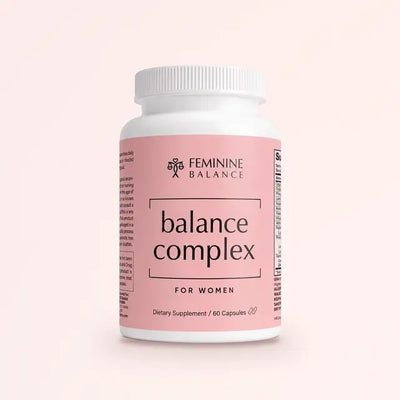
Not for use if pregnant, nursing, or trying to conceive: Balance Complex contains wormwood and black walnut hull.
On the market since 2014, it is made in the USA in GMP-certified facilities and uses plant-based vegetable cellulose capsules rather than gelatin.
Bottom Line
Healthy vaginal lactobacilli keep the environment acidic, and yeast overgrowth usually causes itching more than odor 3. So, does yeast infection smell? Usually only faintly, if at all, with a mild bread-like scent at most. A strong or fishy odor is a cue to get tested for bacterial vaginosis or another cause. Confirm the diagnosis, use antifungal care when yeast is found, and treat any flora support as a complement to that care.
FAQ
Q: Does yeast infection smell bad?
A: Usually not. A vaginal yeast infection typically causes little or no odor. If there is a smell, it is often mild, slightly yeasty, or bread-like. A strong, unpleasant odor points more toward another cause, such as bacterial vaginosis or trichomoniasis. A persistent bad smell is worth checking with a clinician.
Q: What does a yeast infection smell like compared to BV?
A: A yeast infection, if it smells at all, tends to have a faint, sweet, or bread-like scent. Bacterial vaginosis is known for a distinct fishy odor that often becomes stronger after sex or during a period. BV discharge is usually thin and grayish, while yeast discharge is thick and white.
Q: Can a yeast infection cause a strong odor?
A: A strong odor is uncommon with a yeast infection alone. Itching, burning, and thick discharge are the more typical signs. If you notice a powerful or foul smell, you may have bacterial vaginosis, trichomoniasis, or a mixed infection. A healthcare provider can test discharge to identify the cause and recommend the right care.
Q: What does a yeast infection look like down there?
A: Common signs include redness and swelling of the vulva, sometimes with small cracks or soreness in the skin. Discharge is often thick, white, and clumpy, resembling cottage cheese, though it can also be thin and watery. Many people also notice intense itching, burning during urination, and discomfort during sex.
Q: What causes recurring yeast infections in women?
A: Recurring infections can be linked to antibiotic use, poorly controlled blood sugar, hormonal changes from pregnancy or contraceptives, a weakened immune system, or less common Candida species that resist standard medicine. Sometimes the original infection was never fully cleared. Anyone with frequent episodes should see a clinician for testing rather than repeatedly self-treating.
Q: Can you have sex with a yeast infection?
A: It is generally best to wait until symptoms clear. Sex can worsen irritation, cause small tears in inflamed tissue, and slow healing. Yeast can occasionally pass to a partner. Some vaginal antifungal creams and suppositories also contain oils that can weaken latex condoms and diaphragms, which reduces their protection.
Q: What is the best OTC treatment for a yeast infection?
A: Over-the-counter antifungal creams or suppositories containing miconazole, clotrimazole, or tioconazole are standard options. They come in single-dose and multi-day courses, and longer courses may be gentler on irritated tissue. If this is your first infection, symptoms are unusual, or the medicine fails, see a healthcare provider to confirm the diagnosis.
Q: What does a yeast infection under the breast look like?
A: It usually appears as a red or reddish-brown, moist rash in the skin fold beneath the breast. The edges may be raised, sometimes with small satellite spots or pustules nearby. The area can itch, burn, or feel raw, and may have a mild odor. Keeping skin dry helps, and antifungal creams are often used.
References
- Jadhav et al., 2017. PMID: 28922057
- Iavazzo et al., 2011. PMID: 21774671
- Tachedjian et al., 2017. PMID: 28435139
- van de Wijgert J, 2020. PMID: 31299136
- Hosseini et al., 2016. PMID: 28491252
- Khan et al., 2015. PMID: 25681060
- Miranda-Cadena K et al., 2021. PMID: 34649348
- Chen et al., 2026. PMID: 41547378
- Xie et al., 2017. PMID: 29168557