If itching and discharge return soon after every course of antifungal cream, you are not imagining a pattern. A recurring yeast infection usually means the last round left something untouched, such as a resistant strain, hormonal shifts, blood sugar, or a mismatched diagnosis. This guide explains what drives the cycle, what can shift it, and where the evidence stops.
TL;DR: The Basics
Repeat yeast infections rarely resolve on their own. They need a clinician's diagnosis and antifungal medication, and supplements play only a supporting role.
Recurrent cases are studied as their own group. One 2026 analysis pooled randomized trials in nonpregnant women with VVC or recurrent VVC 13, so repeat episodes call for a clinician visit and a culture.
Common triggers include antibiotics, hormonal shifts, blood sugar, and immune status. Lab chemistry is not yeast infection medicine. Researchers have packaged carvacrol in nanoparticles to study its antifungal activity in the lab 11.
Antifungals remain the foundation of care, and probiotics are best viewed as add-ons.
In lab tests on Candida isolated from women, carvacrol, an oregano compound, lowered the expression of enzymes the yeast uses to invade tissue 7.
At most, supportive formulas can help maintain healthy yeast balance alongside antifungal care. When you compare them, look for disclosed strains, plant-based vegetable capsules, and manufacturing in GMP-certified facilities.
What Counts as a Recurring Yeast Infection?
A recurring yeast infection means repeated, separately confirmed bouts of vulvovaginal candidiasis within a year. It does not mean one infection that never cleared. Researchers analyze this group separately from women who have an occasional infection, and a 2026 meta-analysis pooled trials in nonpregnant women with VVC or recurrent VVC 13. The key word is confirmed. Itching, burning, and discharge overlap with conditions such as bacterial vaginosis, so a swab and culture are the usual first step. One Cochrane review tracked relapse at one month separately from initial cure, which shows how researchers distinguish the two 14.
If you are weighing supportive products alongside that care, compare how different formulas are built in our roundup of the best vaginal probiotics.
What Causes Yeast Infections in Women, and Why Do They Return?
A yeast infection is an overgrowth of Candida albicans, a yeast that normally lives in the vagina in small numbers. Healthy vaginal lactobacilli produce lactic acid, which keeps the vagina acidic and has antimicrobial properties 5. A recurring yeast infection tends to return when that lactobacilli-dominated environment is disrupted again and again. Antibiotics, hormonal changes, or uncontrolled blood sugar can all shift the balance. Recurrence also comes from how Candida behaves. The yeast can switch to an invasive hyphal form and build biofilms that are harder to clear.
In lab studies, caprylic acid interfered with both of these steps in Candida albicans cultures 2. In separate lab tests, medium-chain fatty acids including caprylic acid cut Candida biofilm formation by more than 75% 9. These are culture-plate findings, not results in people.
Will a Yeast Infection Heal Itself, or Do You Need Yeast Infection Medicine?
Mild symptoms sometimes settle, but repeat episodes usually call for clinician-guided antifungal care. Self-treatment without a diagnosis often misses the real cause. In a 2026 meta-analysis of 14 trials, adding probiotics to antifungal treatment improved short-term cure with no long-term benefit, and probiotics used alone did worse than antifungals over the long term 13. For stubborn cases, vaginal boric acid is one clinician-guided option. In a 2011 review of 14 studies, vaginal boric acid cleared yeast in 40% to 100% of cases, with no study showing fewer recurrences 4. It is used vaginally and only under medical guidance.
Caprylic acid was described as a treatment for vaginal yeast infection in a 1953 report 12. That historical work is not equivalent to current products, and an active infection still requires clinician care. To see how supportive options fit around that care, read our guide to the best probiotics for women.
What Does the Research Say About Probiotics, Caprylic Acid, and Oregano for Yeast Balance?
Research on probiotics, caprylic acid, and oregano for yeast balance is modest and mostly indirect. In a Cochrane review of 10 trials, probiotics given with antifungal drugs gave a modest short-term boost in cure, without a long-term cure benefit 14. A systematic review of vaginally used lactobacilli products found more promise for BV than for yeast, and the dosed strains did not persist long after dosing stopped 6. In lab tests, carvacrol and thymol, compounds found in oregano, reduced mature Candida biofilms 10. When combined with caprylic acid in the lab, these compounds killed Candida albicans far faster than either agent alone 3.
In lab cultures, thymol and carvacrol also induced oxidative stress in Candida albicans 8.
| Ingredient type | Strongest evidence | Setting | What it supports |
|---|---|---|---|
| Probiotics (add-on) | Meta-analyses of trials | Women, with antifungals | Short-term gains only |
| Caprylic acid | Lab studies | Culture plates | Yeast balance education |
| Oregano compounds | Lab studies | Culture plates | Yeast balance education |
| Vaginal boric acid | Review of 14 studies | Women, vaginal use | Clinician-guided option |
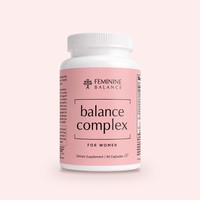
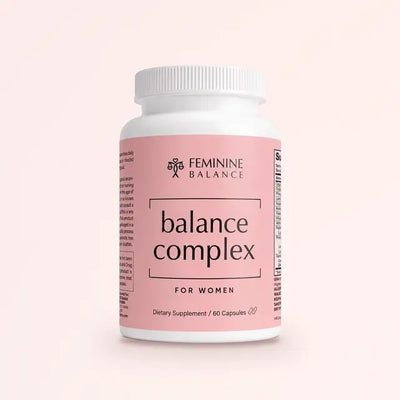
Caprylic acid is a membrane-active medium-chain fatty acid, and oregano leaf is the botanical source of carvacrol and thymol, the compounds examined in the culture-plate work above. Both are ingredients in Balance Complex (caprylic acid as 400 mg of magnesium caprylate, plus oregano leaf extract), included to support healthy yeast balance. They are not a substitute for antifungal care, and a compound that acts on yeast in a dish has not been shown to do the same after it is swallowed.
How Does Vaginal Flora Support Balance Between Yeast Infection Episodes?
Vaginal flora is the vagina's bacterial community, made up mostly of lactobacilli. Between flares, this community helps keep conditions less favorable for yeast overgrowth. In lab studies, the species Lactobacillus reuteri makes reuterin, a natural antimicrobial compound first isolated in 1988 15. Whether swallowed lactobacilli reach the vagina is still under study. A small trial of 36 asymptomatic women taking an oral acidophilus, rhamnosus, and reuteri blend had no control group, so it suggests a direction rather than proof 1. To compare delivery formats, see our guide to oral vs vaginal probiotics.
L. acidophilus is one of the most familiar species in healthy vaginal flora. It is one of the five strains in Balance Complex (four Lactobacillus species plus Bacillus coagulans), included to support healthy vaginal flora. Flora support is a between-episodes habit, and it does not replace antifungal care during a flare.
When Should You See a Doctor About Repeat Infections or Candida glabrata?
You should see a doctor when a yeast infection returns several times a year or does not respond to over-the-counter treatment. Long-term evidence for add-on probiotics is weak, since pooled trials showed no lasting benefit 13. A clinician can culture the yeast and identify less common species such as Candida glabrata, which may respond less reliably to standard medicines. Some Candida isolates taken from women resist fluconazole, a problem examined in lab work on carvacrol 7. Seek care promptly for fever, sores, unusual odor, or pelvic pain, which can signal a different infection. A clinician can then tailor a longer antifungal course or consider a vaginal option such as boric acid under supervision.
How Do Multi-Ingredient Formulas Compare With Other Vaginal Probiotics?
Formulas differ in how openly they disclose strains, potency, origin, and terms, and those details are worth checking. The table below lists the label details to check on any formula.
| Criterion | What to look for |
|---|---|
| Probiotic species | Each species listed by name on the Supplement Facts panel, not hidden in a proprietary blend |
| CFU disclosure | A stated count with its unit (per gram or per serving) made clear |
| Added ingredients | Each added ingredient listed by name, with an amount for it or for the blend it is in |
| Purchase terms | Whether a one-time purchase is possible or a subscription is required |
| Guarantee | Whether a refund is offered, and for how long |
Conclusion: What Is the Bottom Line on a Recurring Yeast Infection?
A recurring yeast infection is a medical problem first and a supplement question second. A confirmed diagnosis, a culture when episodes repeat, and clinician-directed antifungal care form the foundation. Probiotic add-ons showed short-term gains without lasting benefit in pooled trials 14. Caprylic acid and oregano compounds remain lab-stage ingredients for supporting healthy yeast balance. Use them, if at all, alongside treatment and not in place of it.
FAQ
Q: Will a yeast infection heal itself without medication?
A: A mild yeast infection sometimes settles on its own, but many do not. Self-diagnosis is often wrong, because other conditions cause similar itching and discharge. If symptoms persist, return within weeks, or come with fever or pelvic pain, see a clinician for proper testing and antifungal treatment.
Q: What does a yeast infection look like compared with bacterial vaginosis?
A: A yeast infection typically causes thick, white, clumpy discharge with itching, burning, and redness but little odor. Bacterial vaginosis usually produces thin, grayish discharge with a fishy smell and less itching. Because the two are treated differently, a clinician's exam and lab test help confirm which one you have.
Q: What makes yeast infections keep coming back?
A: Repeat infections can follow antibiotic use, uncontrolled blood sugar, hormonal shifts from pregnancy or birth control, or a weakened immune system. Sometimes the original infection was never fully cleared, or a less common Candida species resists standard treatment. A clinician can culture the yeast to identify it and guide a better plan.
Q: Is Candida glabrata harder to treat than a regular yeast infection?
A: Often, yes. Candida glabrata tends to respond less reliably to fluconazole, the oral medicine commonly used for Candida albicans infections. Clinicians may culture to identify the species, then choose alternatives such as boric acid vaginal suppositories or other prescription antifungals, always with follow-up to confirm the infection has cleared.
Q: What yeast infection medication is used for recurrent cases?
A: Recurrent cases are usually managed in two phases. First comes an initial antifungal course to clear the active infection, then a longer maintenance regimen to reduce relapse. Oral fluconazole or topical azole creams are common choices, and your clinician sets the dose, schedule, and duration based on your history.
Q: Can probiotics help, or do I still need yeast infection medicine?
A: Probiotics are not a substitute for antifungal medicine during an active infection. Some women use them between episodes to support a healthy vaginal environment, but the evidence for preventing repeat episodes remains mixed. Treat the current infection as your clinician directs, then ask whether adding a probiotic makes sense.
Q: Has caprylic acid been studied for yeast balance?
A: Yes, but mostly in lab dishes. Culture experiments show caprylic acid interfering with Candida growth forms and biofilms, and an old report from the 1950s described its use for vaginal yeast. Neither shows that an oral capsule clears infection in women, so it belongs alongside, not instead of, antifungal care.
References
- Ansari et al., 2023. PMID: 37111086
- Jadhav et al., 2017. PMID: 28922057
- Bae et al., 2019. PMID: 31334617
- Iavazzo et al., 2011. PMID: 21774671
- Tachedjian et al., 2017. PMID: 28435139
- van de Wijgert J, 2020. PMID: 31299136
- Hosseini et al., 2016. PMID: 28491252
- Khan et al., 2015. PMID: 25681060
- Lee JH et al., 2021. PMID: 33252828
- Miranda-Cadena K et al., 2021. PMID: 34649348
- Vitali A et al., 2021. PMID: 35052888
- Reich WJ et al., 1953. PMID: 13016687
- Chen et al., 2026. PMID: 41547378
- Xie et al., 2017. PMID: 29168557
- Talarico et al., 1988. PMID: 3245697