If you're dealing with itching, burning, or unusual discharge, you may be wondering: will a yeast infection heal itself, or does it need treatment? Some mild cases settle without intervention, but others linger, return, or turn out to be something else entirely. Below is what shifts the outcome, what the research actually covers, and which signs mean it's time to see a clinician.
TL;DR
Some mild yeast infections ease without treatment, but many do not. Symptoms that linger, worsen, or keep coming back need a clinician's diagnosis.
Asking "will a yeast infection heal itself" has no reliable yes. Some mild cases settle, but persistent or recurring symptoms call for professional evaluation.
Yeast symptoms overlap with bacterial vaginosis and other conditions, so the cause should be confirmed before choosing a remedy.
OTC and prescription antifungals (yeast infection medicine) remain the standard of care.
Probiotics studied alongside antifungals showed only short-term gains and are not a substitute for antifungal care.
If you add daily flora support, look for a transparent label: named strains, potency stated per gram (such as 100 billion CFU per gram), GMP-certified manufacturing, and plant-based vegetable capsules.
Will a Yeast Infection Heal Itself? The Short Answer
A mild episode sometimes settles without treatment, but no one can reliably predict which cases will. A Cochrane review of 10 trials found probiotics added to antifungal drugs modestly improved short-term yeast infection cure but not long-term cure 12. A 2026 meta-analysis of 14 trials reported short-term gains when probiotics were paired with antifungals, while probiotics used alone did worse than antifungals over the long term 11. Waiting it out also carries a diagnostic risk. Vaginal itching and discharge can come from several different conditions, so a first episode, a recurrence, or symptoms during pregnancy should be checked by a clinician.
To understand the standard options, read our overview of yeast infection medicine.
What Is a Vaginal Yeast Infection?
A vaginal yeast infection, or vulvovaginal candidiasis, is an overgrowth of Candida yeast, most often Candida albicans. In a healthy vagina, lactobacilli produce lactic acid, which keeps the environment acidic and has antimicrobial properties 7. When that balance shifts, Candida can multiply and change shape into a more invasive form. Researchers have looked at food-derived compounds that interfere with this shape change. In lab studies, caprylic acid, a medium-chain fatty acid, blocked Candida albicans from switching to its invasive hyphal form and from forming biofilm 4. In separate lab tests on Candida isolated from women, carvacrol, a compound found in oregano, lowered the expression of enzymes the yeast uses to invade tissue 9.
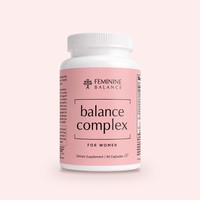
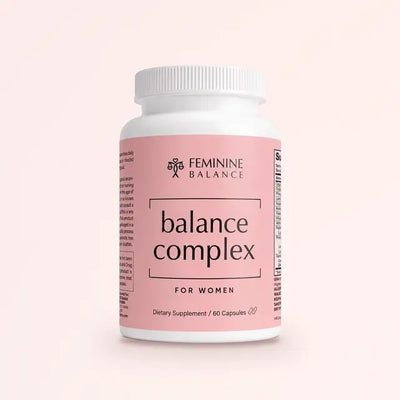
These are lab findings only and do not show effects in the body. Caprylic acid (as magnesium caprylate) and oregano leaf, the plant source of carvacrol, are both ingredients in Balance Complex, included as ingredients studied for anti-Candida activity in vitro to support healthy yeast balance. Neither is a substitute for antifungal care. Because these signs are shared with other vaginal conditions, an exam and sometimes a swab are the dependable way to know what you are dealing with.
What Causes Yeast Infections in Women?
Yeast infections usually begin when the vaginal ecosystem loses some of its protective bacteria. In a placebo-controlled trial of 64 healthy women, oral L. rhamnosus GR-1 with L. reuteri RC-14 (then called L. fermentum) taken for 60 days was linked to more vaginal lactobacilli and less yeast at day 28 1. That finding hints at how closely yeast levels track the surrounding flora. Common triggers include antibiotics, hormonal changes linked to pregnancy, birth control or the menstrual cycle, elevated blood sugar, a weakened immune system, and warm, moist conditions from tight clothing. Whether a yeast infection heals itself often depends on whether the trigger goes away.
Restoring flora directly is harder than it sounds: a systematic review of 34 studies of probiotic products used vaginally reported promise for BV but little for yeast, and the dosed strains faded after use stopped 8. There is a separate article on a related question, BV or Yeast Infections.
Is Candida Glabrata Harder to Clear on Its Own?
Not every yeast infection is caused by Candida albicans, and the species matters for treatment. For recurrent or stubborn cases, clinicians sometimes turn to boric acid used vaginally; a 2011 review of 14 studies found it cleared yeast in 40% to 100% of cases, with no study showing fewer recurrences 6. That wide range reflects how differently individual cases respond. Candida glabrata and other non-albicans species can respond less predictably to common azole antifungals, and their symptoms are often milder, which makes them easy to dismiss. Mild symptoms that never fully resolve are a reason to ask for a culture rather than to keep waiting.
Our guide to boric acid suppositories explains when clinicians consider that option.
When Do You Need Yeast Infection Medicine?
Antifungal medication remains the standard approach for a confirmed vaginal yeast infection. In a retrospective study of 89 women, a vaginal L. plantarum P17630 capsule used after clotrimazole was linked to more lactobacilli (80% vs 40%) and better symptom relief (90% vs 67.5%), but not to significantly fewer recurrences 3.
| Option | Role | What the evidence shows | Replaces antifungals? |
|---|---|---|---|
| Waiting it out | Mild, first-time symptoms only after diagnosis | Unpredictable; no reliable timeline | No |
| OTC or prescription antifungals | Standard of care | Comparator in every probiotic trial | n/a |
| Vaginal boric acid | Recurrent cases, clinician-guided | Cleared yeast in many cases; no recurrence benefit shown | No |
| Probiotics with antifungals | Adjunct | Short-term gains only | No |
| Probiotics alone | Not a treatment | Worse than antifungals long term | No |
See a clinician if this is your first infection, if you are pregnant, if symptoms return often, or if over-the-counter treatment has not helped. Fever or pelvic pain also call for a professional diagnosis.
How Does Vaginal Flora Balance Affect Yeast Overgrowth?
Asking whether a yeast infection will heal itself is really asking about the bacteria living alongside Candida. In a small oral study with no control group, 36 asymptomatic women took an L. acidophilus, L. rhamnosus and L. reuteri blend for 6 weeks, and 6 of 10 women with dysbiosis moved to a normal Nugent score 2. Because that study had no comparison group and measured bacterial balance rather than yeast, it is context, not proof. When the lactobacillus community thins after antibiotics, hormonal shifts, or stress, yeast meets less competition. Flora support fits best as a steady daily habit alongside proper care, not as a rescue during an active infection.
L. acidophilus, L. rhamnosus, L. reuteri and L. plantarum are lactobacillus species long studied in women's health. They are among the five strains in Balance Complex (four Lactobacillus species plus Bacillus coagulans), included to support healthy vaginal flora. Bacillus coagulans, the fifth strain, is a spore-former, which is why it holds up on a shelf without refrigeration. That is a formulation detail rather than a reason to skip antifungal care.
Yeast Infection Under the Breast: When to See a Doctor
Yeast does not only affect the vagina; it also grows in skin folds and the mouth. In lab tests caprylic and capric acid inhibited Candida mycelial growth, and in an animal study in mice, capric acid (a related fatty acid) improved oral thrush 5. Skin-fold yeast thrives where warmth, sweat, and friction trap moisture, so a mild rash under the breast may settle once the area stays clean, dry, and aired out. Book an appointment if any of these apply:
The rash spreads, cracks, oozes, or smells.
It does not improve after a few days of home care.
You have diabetes, a weakened immune system, or a fever.
It is your first suspected yeast infection, or you are pregnant.
Infections keep returning.
What Should You Look For in a Flora-Support Supplement?
Any supplement belongs alongside antifungal care, never in place of it. Pooled trial data show probiotics given with antifungals produced better short-term results with no lasting edge, and probiotics on their own fell behind antifungals over time 11. With that limit in mind, label quality is what you can actually judge. Useful criteria include:
Named species on the label, not just a "proprietary blend."
Potency stated per gram so you can compare products honestly.
Manufacturing in GMP-certified facilities.
Plant-based vegetable capsules and a clear daily serving.
A refund policy long enough to cover 60 to 90 days of consistent use.
The formula meets these points: five probiotic strains at 100 billion CFU per gram, made in the USA in GMP-certified facilities, in vegetable cellulose capsules taken as 2 capsules once daily with a meal. Not for use if pregnant, nursing, or trying to conceive: Balance Complex contains wormwood and black walnut hull.
So, Will a Yeast Infection Heal Itself?
Sometimes, but not reliably enough to count on. Even targeted probiotic products used vaginally showed little benefit for yeast, and the strains did not stick around once dosing ended 8. That makes a clinician's diagnosis and antifungal treatment the dependable path. If you are wondering whether a yeast infection will heal itself, give mild first-time symptoms only a short window, and seek care for anything persistent, recurrent, or unusual. Daily flora support can sit alongside that care as a long-term habit.
FAQ
Q: Will a yeast infection heal itself without treatment? A: Sometimes a mild yeast infection fades as the vaginal environment rebalances, but this is unpredictable. Many cases linger, worsen, or return without antifungal treatment. Confirm the diagnosis with a clinician, especially for a first episode, severe symptoms, or pregnancy, rather than assuming it will clear up by itself.
Q: How long does a yeast infection last if untreated? A: There is no reliable timeline. A mild infection may fade within days, while others persist for weeks or keep returning until they are treated. If itching, burning or discharge continues, worsens, or recurs, see a healthcare provider instead of waiting and hoping the symptoms resolve naturally.
Q: Can a yeast infection be mistaken for something else? A: Yes. Itching, irritation and discharge also show up with bacterial vaginosis, sexually transmitted infections, and skin conditions. Treating the wrong cause can delay relief. A clinician can examine you and test a sample, which is the dependable way to identify the cause before choosing a remedy.
Q: Are probiotics a replacement for antifungal medicine? A: No. Pooled trials found probiotics helped modestly in the short term only when added to antifungals, and probiotics alone did worse than antifungals long term 11. Think of flora support as a daily habit alongside proper care, not as a substitute for antifungal treatment.
Q: Has caprylic acid been studied for vaginal yeast? A: Caprylic acid was described as a treatment for vaginal yeast infection in a 1953 report on women with that condition 10. That historic work is not equivalent to current products, its dose and route differ, and yeast symptoms today still require proper clinician care and diagnosis.
Q: When should I see a doctor for a yeast infection? A: See a clinician for a first suspected infection, pregnancy, four or more episodes a year, fever, pelvic pain, or symptoms that over-the-counter treatment has not improved. Diabetes or a weakened immune system are also reasons to get checked promptly rather than waiting.
Q: Can I take a flora-support formula while pregnant? A: Not this one. The formula discussed here is not for use if pregnant, nursing, or trying to conceive, because it contains wormwood and black walnut hull. If you are pregnant and have yeast symptoms, talk with your prenatal care provider about safe antifungal options.
References
- Reid et al., 2003. PMID: 12628548
- Ansari et al., 2023. PMID: 37111086
- De Seta et al., 2014. PMID: 25305660
- Jadhav et al., 2017. PMID: 28922057
- Takahashi et al., 2012. PMID: 23257726
- Iavazzo et al., 2011. PMID: 21774671
- Tachedjian et al., 2017. PMID: 28435139
- van de Wijgert J, 2020. PMID: 31299136
- Hosseini et al., 2016. PMID: 28491252
- Reich WJ et al., 1953. PMID: 13016687
- Chen et al., 2026. PMID: 41547378
- Xie et al., 2017. PMID: 29168557